Thursday, 15 August 2024

GREEN CEMENT


Green Cement

Context – Green cement as a sustainable construction material

Concept –

  • Green cement is an environmentally friendly product that minimizes the carbon footprint of cement production.

Why is cement manufacturing polluting ?

India’s cement industry contributes 7% of co2 emission as it is heavily relied on coal. Its main challenges are clinker dust, leaks during production and transport, waste during manufacturing , heavy reliance on coal for power. 

  • Many attempts have been made to produce green cements and several green cement types have been produced.

  • The majority of these are based on technological advances that include energy-efficient, low carbon production methods, new cement formulations, geopolymers, carbon-negative cements, and new concrete products.

  • Additionally, green cement production reduces cement intake, and its major raw materials include discarded industrial wastes like blast furnace slag and fly ash.

  • Ekkomaxx cement, magnesium oxychloride cement, geopolymer cement, ferrocrete, calcium sulfoaluminate cement, and sequestrated carbon cement are some examples of green cement. Some of these products have been commercialized and used in various projects whereas a number of these cements have not been utilized broadly in construction projects but possess great potential to be used.

  • It has been estimated that a single tonne of Portland cement releases approximately six percent of the total man-made carbon emissions, which significantly contributes to the current environmental issues. The usage of green cement can provide an effective solution to such pressing complications. 

  • Substituting coal with hydrogen in the cement plant can eliminate CO2 emissions, with hydrogen having six times the calorific value of coal. The cement manufacturer will switch to hydrogen if its adjusted cost, including carbon tax, is equal to or lower than coal costs. There is a demand for green cement, potentially available at a 15% premium.

To make cement manufacturing green focus on 4 areas : 

  1. Use alternative fuels like RDF,MSW & Renewable energy, optimise power consumption with AI technologies.

  2. Electrifying kilns to reduce emissions, adopting technologies like rotodynamic heaters.

  3. Developing eco-friendly cements such as EKKOMAXX & ECOPact, using alternative raw materials and increasing fly ash and pond ash .

  4. Improving carbon capture utilization and storage (CCUS) technologies to capture and use CO2 emissions.

Advantages

  • Lowers carbon dioxide emission as it does not require as much heat during its production, releasing up to 80% less carbon dioxide. Helps to achieve net zero carbon emission target by 2070.

  • Makes use of industrial waste such as fly ash, silica fume, and last furnace that may require several acres of land to dispose of. As a result, it protects land from becoming a dumping ground and ultimately being destroyed.

  • Requires less energy since industrial by-products present in green cement, the energy needed in production is greatly reduced. Additionally, it withstands temperature fluctuations and hence decreases costs related to both heating and cooling.

  • Long-lasting – Having a low shrinkage rate, green cement tends to be more long-lasting than the traditional cement..

Monday, 12 August 2024

Megaquakes Warning in Japan What's Next


MEGAQUAKES ADVISORY ISSUED FIRST TIME IN JAPAN 


What do we mean by megaquakes ?


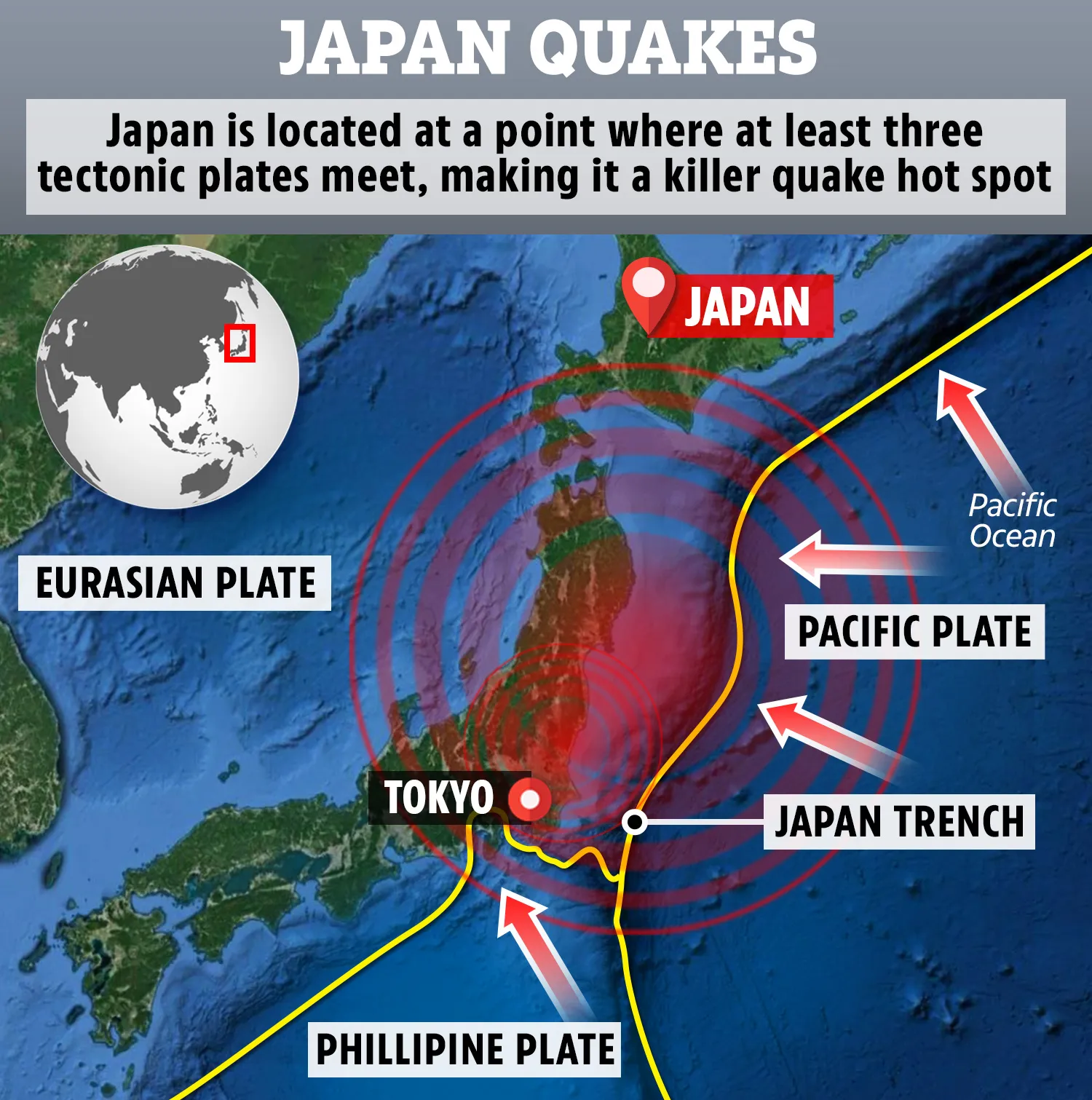
Megaquake means earthquakes more than 8 or 9 magnitude such dangerous earthquakes occurs in centuries has great potential to shake the entire japan and huge tsunami waves upto 90 feet hit the coast immediately.


Why megaquake advisory in japan now ?


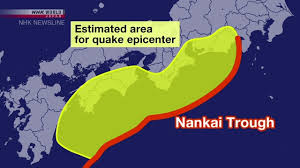
In 8th august 2024 an earthquake of magnitude 7.1 hit southern japan and seismic studies done in Nankai trough, a subduction zone along Japan’s south west pacific coast found that here Philippines plate get subducted under Eurasian plate created a megathrust zone. This Nankai trough causes megaearthquakes in pairs like in 1946 and 1948. 


The Nankai trough produced mega earthquakes in every 100-150 years. According to 2023 study, high probability of successive big earthquakes occurrence from Nankai megathrust zone. 


When will the next megaquake in Nankai trough ?


In January 2022, Japan’s Earthquake Research Committee said the next magnitude 8-9 megaquake along the trough has a roughly 70% probability of striking within the next 30 years.


What will be the adverse impact of megaquakes ?


An earthquake more than 8 or 9 magnitude will cover one third of Japan and affect one half of japan's population. such a megaquake could send tremors to areas from central Shizuoka — about 150 km south of Tokyo — to southwestern Miyazaki, 


Tsunami waves of up to 98 feet may reach Japan’s Pacific coasts within minutes after the quake.


The economic damage due to the disaster could go up to $1.50 trillion, or more than a third of Japan’s annual gross domestic product.


How to predict the earthquake occurrence ?


An earthquake prediction must define 3 elements: 1) the date and time, 2) the location, and 3) the magnitude. 


There is no 100% scientific method to predict and forecast an earthquake. Some methods are tried such as : 

  1. Abnormal animal behavior

  2. P & S wave analysis and foreshock waves before hit by R & L wave or mainshock wave

  3. Geological studies identified gaps /stress in the rock or thrust zone

  4. Precursor emission of radon gas , the concentration suddenly increase before an earthquake in deep waterbodies.

  5. Electro-magnetic studies is under R & D phase.

Sunday, 11 August 2024

Saving Pollinators Critical Importance & Solutions! #science #mains


Pollinators decline and its effect


Pollinators are animals that transfer pollen from anther(male) to stigma(female) results into fertilization of flowering plants, therefore leading to higher agricultural yield, biodiversity services and seed production. The major pollinators are bees, wasps, butterflies, moths,flies,insects, beetles, birds, mammals like bats, squirrels, monkeys,etc.


Pollinating Agents : 

Plants utilise both biotic and abiotic agents for pollination.

Biotic agents – Animals, insects, butterflies, etc. Pollination by insects is called entomophily and pollination by birds is called ornithophily. Pollination by vertebrates is known as zoophily.

Abiotic agents – Wind and water. Wind pollination is known as anemophily and pollination by water is called hydrophily.

Importance of pollinators : 

  1. Globally nearly 90% of wild flowering plant species depend on animal pollination.

  2. Pollinators consequently play a key role in regulating ecosystem services supporting food production, habitats and natural resources.

  3. More than 75% of leading global crop types benefit from animal pollination in production, yield and quality.

  4. Around 5-8% of current global crop production is directly ascribed to animal pollination, which equates to somewhere between 235 and 577 billion American dollars worldwide.


Threats to pollinators : 

  1.  Climate change has altered the range, abundance and seasonal activities of some wild pollinator species.

  2. Humans have altered the natural landscape and changed land use, reducing the natural habitat of wild pollinator species.

  3. Environmental pollution has degraded the natural habitats.

  4.  Habitat destruction, fragmentation and degradation often reduce pollinators’ food and nesting resources.

  5. Intensive agriculture practices use of pesticides and insecticides threaten the pollinator species.

  6.  Mass breeding and large-scale transport of managed bees contributed to an enhanced transmission of parasites and pathogens. This spreads diseases across the entire community of both wild and managed pollinators. 

  7. Additionally, it increases the occurrence of more dangerous pathogens, alien species invasions and regional extinction of native species.


 more than 40% of bee families are threatened with extinction. These are some of reasons that natural pollinators are disappearing:

  • Change of land use, intensive agriculture, the spread of transgenic crops and plantations of invasive exotic species.

  • Environmental pollution, climate change and the use of pesticides, especially neonicotinoid insecticides.

  • Proliferation of pathogens which attack bee populations bred in captivity.

Effect of declining pollinators : 


The international community is worried about the decline in natural pollination. A reasonable fear, as global agriculture needs more pollinators every day to supply food: crops that depend on these animals currently yield 300% more than five decades ago.

The extinction of pollinators could put our health at risk, as we will lose the ability to grow vegetables, fruit and seeds —food necessary for a healthy diet. It would also harm development of medications, biofuels, fibres such as cotton and construction materials like wood. Crop losses due to natural pollination would affect the economy of many countries and many jobs would be lost in the farming industry and ancillary industries.

Measures to check decline of pollinators : 

The UN, through IPBES, has suggested a strategic plan to slow down the disappearance of natural pollinators, which consists of:

  1. Promoting the transition towards sustainable agriculture and eliminating large areas devoted to monoculture.

  2.   Developing new agricultural techniques which combine scientific developments with traditional practices like crop rotation and fallow land habitats.

  3.   Avoiding pesticide use and promoting organic farming and integrated pest management.

  4. Reducing production of transgenic crops — organisms which are genetically modified using agricultural biotechnology.

  5.  Paying more attention to pathogen hygiene and control at honeybee farms. This involves improving the rules regarding the use of and trade in honeybees.

  6.   Diversifying crops and rehabilitating ecosystems to ready them for the consequences of climate change.

  7.   Driving global governance to enable a coordinated approach between different sectors and jurisdictions, making society aware of the magnitude of the problem.

Deep Sea Acidification 21st Century Impact : CARBONATE COMPENSATION DEPTH


Carbon ( carbonate) compensation depth is expanding :

--- The deepest part of the ocean below 4000m deep there exists high pressure and low temperature that creates conditions to dissolve calcium carbonate, the material marine animals use to make their shells called carbonate compensation zone (CCD).

--- this zone is expanding means more areas where carbonate dissolves. The main causes for expansion of CCD are :
a) rising carbon dioxide levels 
b) lowering pH value, increasing ocean acidity.
c) raising the lysocline

---- impacts of expanding CCD are :
  a) rising lysocline nearly 100m since pre industrial times and rise further by few 100s meters by end of 21st century.
b) the oceanic floor is chemically unstable, leading to sediment dissolution.
c) different species dominate habitats above and below CCD, with more calcified organisms above and non-calcified organisms below get affected 
d) marine ecosystems get degraded and many species lost especially corals reef which further affects the socio-economic conditions of island nations.
e) island nation's exclusive economic zone (EEZ) will be significantly impacted like Bermuda.
f) by the end of the 21st century 51% of the deep sea will be acidic.

Friday, 9 August 2024

Organic Farming in India A Sustainable Agriculture


https://iaspriyeshsirstudents.blogspot.com/2020/02/organic-farming-in-india-or-sustainable.html

NATURAL FARMING IN INDIA

India focus on natural farming 
Context:

• Union Finance Minister Nirmala Sitharaman announced plans to involve one crore farmers in natural farming over the next two years, supported by certification and branding.
• Implementation will involve scientific institutions and gram panchayats, with 10,000 bio-input resource centres to be established.

National Mission on Natural Farming (NMNF):

• NMNF aims to encourage farmers to adopt chemical-free farming using locally-produced, cow-based inputs.
• The natural farming scheme, under the ‘Bharatiya Prakritik Krishi Paddhati,’ has a budget of ₹4,645.69 crore for six years (2019-20 to 2024-25).

What is Natural Farming?

• Natural farming avoids chemical fertilizers and pesticides, using traditional practices like biomass recycling, cow dung-urine formulations, and on-farm botanical concoctions.
• It focuses on natural nutrient cycling and increasing soil organic matter, integrating crops, trees, and livestock.

Its key components include:

  • Soil Aeration
  • Minimal Watering to save electricity
  • Intercropping
  • Construction of bunds and topsoil mulching

Furthermore, ZBNF discourages practices such as intensive irrigation and deep ploughing while opposing the use of vermicompost. Instead, it advocates for the revival of local deep soil earthworms through increased organic matter.

In ZBNF, chemical fertilizers and pesticides are replaced by locally available resources like cow dung, cow urine, and jaggery. Seeds are treated with natural ingredients prepared on the farm by the farmer.

ZBNF promotes the application of:

  • Jivamrita/Jeevamrutha: A fermented microbial culture that enriches the soil with nutrients, enhances microbial activity, and prevents fungal and bacterial diseases in plants.
  • Bijamrita: A protective solution that shields young roots from fungal and soil-borne diseases, prepared from a blend of desi cow dung, urine, and jaggery.
  • Acchadana/Mulching: The application of a protective layer of biomass on the soil surface.
  • Whapasa/Moisture: Maintaining the ideal balance of air and water molecules in the soil to promote optimal plant growth. This involves reducing irrigation and watering only at noon, in alternate furrows.

BHARTIYA  PRAKRITIK KRISHI PADHHATI YOJANA

  • The Bharatiya Prakritik Krishi Paddhati (BPKP) Scheme for Natural Farming was launched by the Ministry of Agriculture & Farmers Welfare in the fiscal year 2020-21. 
  • It operates as a sub-scheme of the Paramparagat Krishi Vikas Yojana (PKVY) and aims to promote traditional indigenous farming practices.

Natural farming practice:

• Natural farming is an ecological farming approach where farming system works with the natural biodiversity, encouraging the soil’s biological activity and managing the complexity of living organisms both plant and animal to thrive along with food production system. Important practices, essential for adoption of natural farming includes:
o No external inputs,
o  Local seeds (use of local varieties), .
o On-farm produced microbial formulation for seed treatment (such as bijamrita),
o On-farm made microbial inoculants (Jivamrita) for soil enrichment,
o Cover crops and mulching with green and dry organic matter for nutrient recycling and for creating a suitable micro-climate for maximum beneficial microbial activity in soil.
o Mixed cropping,
o Managing diversity on farm through integration of trees
o Management of pests through diversity and local on-farm made botanical concoctions (such as neemastra, agniastra, neem ark, dashparni ark etc);
o Integration of livestock, especially of native breed for cow dung and cow urine as essential inputs for several practices and
o Water and moisture conservation.

AIMS AND OBJECTIVES FOR NATURAL FARMING PROMOTION:

• Preserve natural flora and fauna
• Restore soil health and fertility and soil’s biological life
• Maintain diversity in crop production
• Efficient utilization of land and natural resources (light, air, water)
• Promote natural beneficial insects, animals and microbes in soil for nutrient recycling and biological control of pests and diseases
• Promotion of local breeds forlivestock integration
• Use of natural / local resource-based inputs
• Reduce input cost of agricultural production
• Improve economics of farmers

Challenges and Concerns:

• Experts express concerns about transitioning from chemical to natural farming on a large scale in India, given the country's food security needs.
• An academic paper highlights mixed outcomes from different studies on Zero Budget Natural Farming (ZBNF), with Andhra Pradesh showing positive results, while another study notes significant yield declines in key crops like wheat and basmati rice.
* yield decline due to adoption of organic farming as reported by Sikkim first organic state of India, even studies done in Maharashtra shows farmers again shifted from zero budget natural farming to conventional farming again as they has lower benefits, 
* inputs shortage for organic farming that delays its adoption and profitability of farmers.
*  initial cost for zero budget natural farming is high and waiting period is longer than 4 years that farmers can’t wait.
*  resistance to zero budget natural farming by chemical industries that hinders its promotions.
*.  Difficulties to obtain certification for organic crops and products 
• Sri Lanka's complete shift to organic farming led to economic and political turmoil, highlighting the risks of a sudden transition without adequate preparation and study.

Thursday, 1 August 2024

Bharat Small Reactors India's Nuclear future


What Are Bharat Small Reactors (BSRs)?

 Bharat Small Reactors are compact nuclear reactors designed to generate electricity on a smaller scale compared to traditional large nuclear power plants.


• Technology: They utilize India’s proven 220-megawatt Pressurized Heavy Water Reactor (PHWR) technology, with 16 operational units already in the country.


• Innovation: A significant change is the involvement of the private sector in their development and deployment, a first in India’s nuclear policy history.

Advantages of Bharat Small Reactors


1. Flexible Siting: Can be installed in various locations, including remote areas.


2. Rapid Deployment: Faster to build and operationalize compared to larger nuclear plants.


3. Cost-Effective: Potentially lower costs due to smaller scale and quicker construction.


Why Does India Need Bharat Small Reactors?


• Energy Accessibility: Ideal for providing electricity to remote and underserved regions.


• Industrial Use: Can serve as captive power units for large industries such as cement and steel.


• Clean Energy Transition: Part of India’s strategy to diversify its energy mix and reduce reliance on thermal power, contributing to cleaner energy goals.


Government Initiatives and Future Plans


• Budget 2024 Announcement: Finance Minister Nirmala Sitharaman announced the development of BSRs, highlighting a partnership with the private sector for research and deployment.


• Research and Development: Plans for developing Bharat Small Modular Reactors (BSMRs) are also underway, focusing on newer, factory-made reactor technologies.


• Policy Shift: The inclusion of the private sector marks a historic shift from the Atomic Energy Act of 1962, potentially accelerating the growth of nuclear power in India.


Global Alignment and Challenges


• Global Trends: The development of BSRs aligns with the international focus on small modular reactors (SMRs), though BSRs are distinct in their use of existing PHWR technology.


• Implementation Hurdles: Integrating these reactors into the electricity grid and ensuring private sector participation will require new policies and legal frameworks.


• Safety and Waste Management: Addressing safety concerns and effective nuclear waste management will be crucial for the successful deployment of BSRs.

L 26 JET STREAM CAUSES TYPES AND ROLE

JET STREAM & ITS SIGNIFICANCE MEANING AND ORIGIN  CHARACTERISTICS TYPES AND ITS DISTRIBUTION CAUSE AND MECHANISM WEATHER ASSOCIATED WITH...